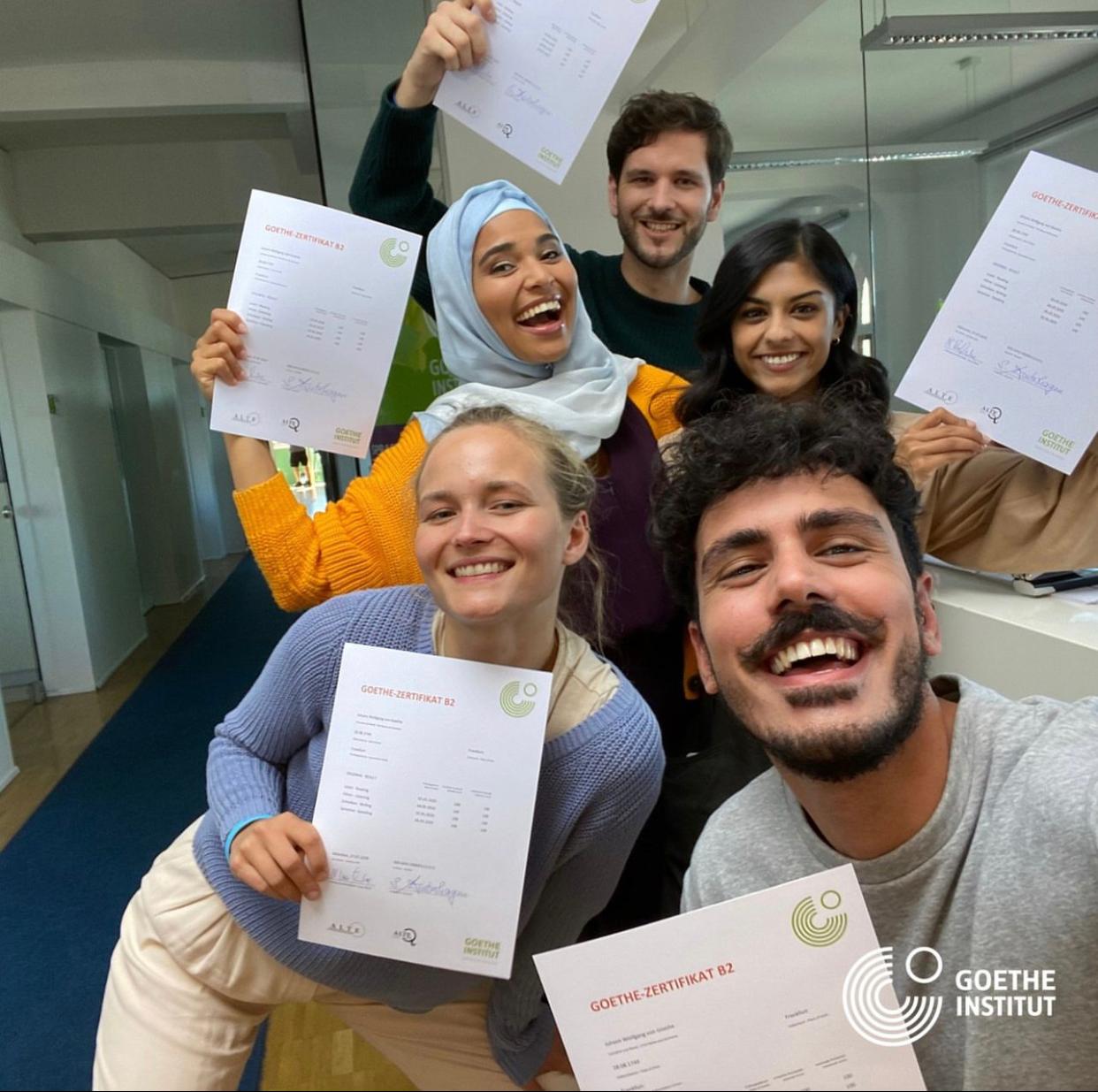
How To Create An Awesome Instagram Video About B1 German Certificate


Understanding the B1 German Certificate: A Comprehensive Guide
In today's globalized world, language proficiency has actually become an invaluable asset, specifically in the context of travel, education, and employment. The B1 German Certificate is a vital milestone for numerous learners seeking to prove their competency in the German language. This post aims to offer a thorough summary of the B1 German Certificate, including its significance, evaluation structure, preparation tips, and answers to often asked questions.
What is the B1 German Certificate?
The B1 German Certificate is a standardized assessment of language efficiency in German, comparable to the 3rd level (B1) of the Common European Framework of Reference for Languages (CEFR). It symbolizes an intermediate level of German, showing that the individual can understand and produce language relevant to familiar topics, handle day-to-day communication, and reveal viewpoints on individual interests.
Importance of the B1 German Certificate
The certificate serves several functions:
- Academic Requirements: Many German universities require a B1 certificate for admission into courses carried out in German.
- Employment Opportunities: It can improve task prospects in Germany or other German-speaking nations, as companies typically value prospects with proven language abilities.
- Visa Applications: Certain visa applications may require an efficiency certificate to demonstrate language capability.
- Personal Development: Achieving this level of efficiency can boost self-confidence and open doors to further language learning.
Secret Components of the B1 German Certificate Exam
The B1 German Certificate exam consists of a number of parts that evaluate listening, reading, writing, and speaking skills. Below is a breakdown of each component and its corresponding weightage:
| Component | Description | Period | Weightage |
|---|---|---|---|
| Listening | Understanding spoken German through various audio products | 30 minutes | 25% |
| Reading | Understanding of written texts, including posts and notifications | 60 minutes | 25% |
| Writing | Making up a brief text, such as a letter or an e-mail | 45 minutes | 25% |
| Speaking | Engaging in a discussion with an examiner | 15 minutes | 25% |
Overview of Exam Content
- Listening: Candidates listen to dialogues, statements, and stories, showing their ability to understand spoken German in numerous contexts.
- Checking out: This area requires candidates to check out and understand texts associated with individual interests, work, and everyday life, answering concerns based upon the material.
- Writing: Candidates need to produce meaningful composed texts, showcasing their capability to arrange ideas and communicate details successfully.
- Speaking: In an one-on-one interview format, prospects participate in a conversation, enabling them to reveal themselves and react to questions.
Preparation Tips for the B1 German Certificate
Getting ready for the B1 exam requires a structured approach. Here are some strategies to efficiently prepare:
Create a Study Schedule
Setting up a reasonable research study schedule is essential. Designate time for each part of the exam and adhere to your schedule.
Use Authentic Materials
Engage with authentic German language materials, such as papers, podcasts, and films. Listening to and reading real German content boosts understanding and exposure to different accents and dialects.
Experiment Sample Papers
Resolving sample exams gives prospects a feel for the exam's structure and timing. It also assists determine areas for enhancement.
Join Language Classes
Registering in a language class with a qualified instructor can facilitate guided learning and offer important feedback on language proficiency.
Language Exchange
Participating in language exchange with native speakers can improve conversational abilities and enhance speaking fluency.
Online Resources
Utilize online platforms, such as language-learning apps and sites, that use exercises and quizzes customized to the B1 level.
Typical Challenges in Achieving B1 Proficiency
- Vocabulary Limitations: Limited vocabulary can impede reliable interaction. Broadening one's word bank is vital.
- Grammar Complexity: B1 level presents more intricate grammatical structures, which might require extra practice to master.
- Listening Comprehension: Understanding spoken German in real-world contexts can be challenging due to speed and accent variations.
Regularly Asked Questions (FAQ)
1. The length of time does it require to get ready for the B1 German Certificate?
Preparation time varies by individual, but a lot of learners require 4-6 months of consistent research study to achieve B1 efficiency.
2. How is the B1 German Certificate scored?
Examinations are graded on a scale of 0 to 100. Prospects normally need a score of at least 60% to pass. geothezertifikat4all.de is weighted equally, contributing to the overall score.
3. Can I retake the exam if I fail?
Yes, candidates can retake any element of the exam they did not pass. It is recommended to focus on weaker locations before attempting to retake the exam.
4. Is the B1 certificate legitimate indefinitely?
Yes, the B1 German Certificate does not have an expiration date. Nevertheless, some institutions or employers might ask for a recent certificate for their criteria.
5. Where can I take the B1 German Certificate exam?
Examinations are provided at different language schools, Goethe-Institut branches, and licensed examination centers worldwide. Candidates must inspect with these institutions for particular information regarding registration and accessibility.
The B1 German Certificate is an essential credential for anybody seeking to develop their proficiency in the German language. As an intermediate level qualification, it opens opportunities for academic development, work, and individual growth. With dedicated preparation and efficient research study strategies, achieving the B1 German Certificate is within reach for language learners. Whether one is motivated by profession aspirations or cultural exploration, mastering this level of German can be a fulfilling endeavor that results in a much deeper understanding of the language and its involved culture.